


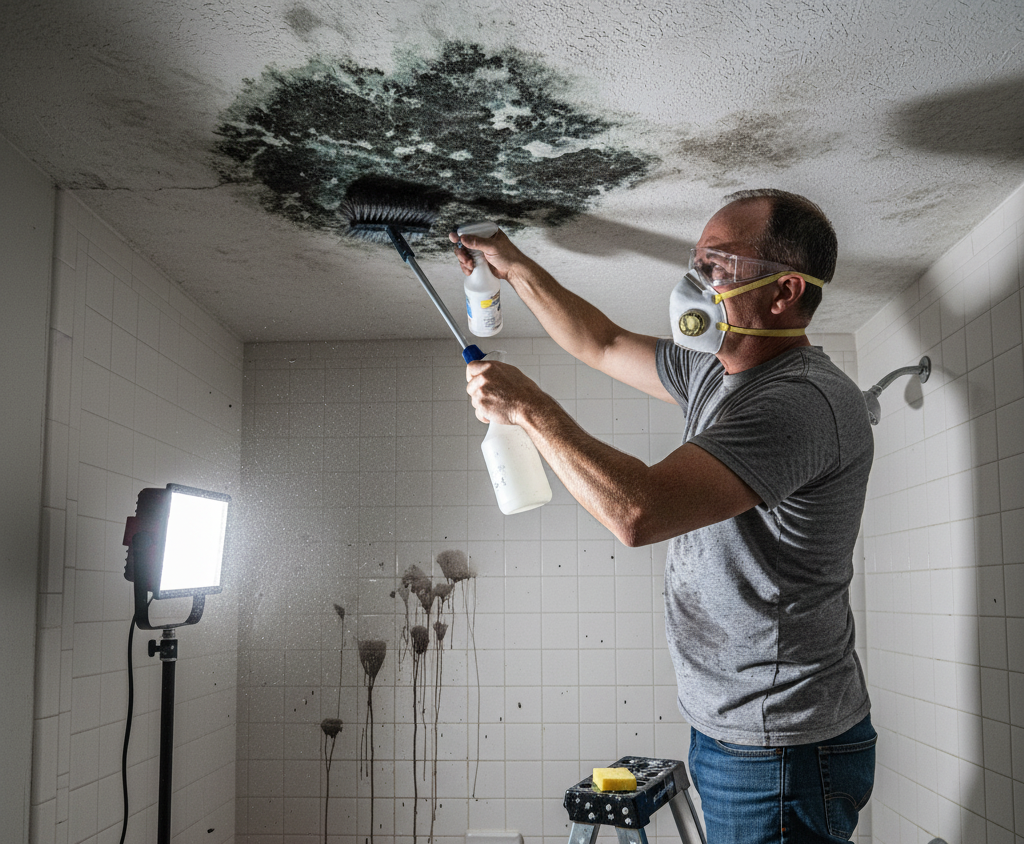
- Plastic Sheets: Cover floors and nearby surfaces to catch falling mold spores.
- Protective Gear: Wear gloves, safety glasses, and a respirator to prevent breathing spores and avoid contact with cleaning chemicals.
- Ventilation Equipment: Set up fans or open windows to keep fresh air moving through the space.
Having your equipment and safety gear ready before you start helps the job go smoothly. Good preparation means you can work efficiently without having to stop to find missing supplies.
- Ventilation: Ensure your bathroom has good airflow to reduce moisture buildup, where mold thrives.
- Use Mold-Resistant Paint: Paint your ceiling with mold-resistant products that discourage mold growth.
- Monitor Humidity Levels: Check bathroom humidity regularly and maintain a low level to prevent excessive dampness.
Related Topics:
Case Study: Restaurant Water Damage Restoration Quick Turnaround
For a restaurant, every closed day costs money. Missed meals, lost staff hours, canceled reservations,…
DIY Water Damage Prevention Tips for Tampa Homeowners
Most water damage does not start with a major disaster. It often starts with something…

Seasonal Storm Prep Guide for Tampa Homes
Tampa homes face a real storm risk every year, and most of the damage is…
How Tampa Insurance Works for Water Damage Claims
Filing a water damage claim in Tampa can be more complicated than homeowners expect. Insurance…

Does Insurance Cover Leaky Pipe Damage in Tampa?
When water starts spreading across the floor or dripping from the ceiling, most people wonder…
Water Damage Equipment Explained: Dryers, Dehumidifiers, and Moisture Meters
After a leak or flood, the equipment placed in your home can feel like a…